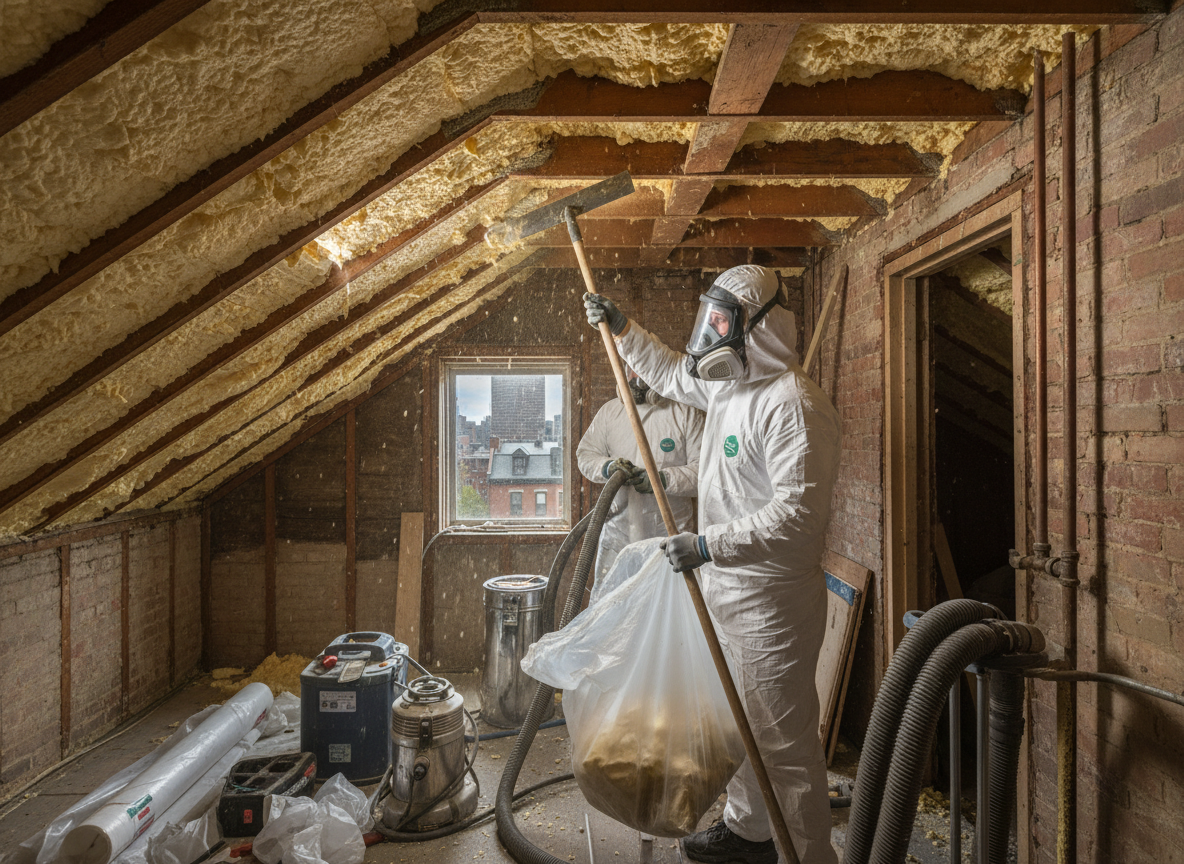
Boston Lincolnshire homes, particularly those built before the 1970s in areas around South Street and the river frontage, often received spray foam insulation in lofts during later energy upgrades. Over time the foam can trap moisture against original timber rafters and brickwork, especially during the county's frequent winter rainfall and high water table. Removal requires careful sectioning to avoid disturbing asbestos-containing materials sometimes present in older ceilings and to prevent debris falling into living spaces below.
The flat terrain around Boston means many properties have limited loft ventilation once foam is installed, leading to condensation problems that only appear years later. Technicians must first establish the foam type and depth, then create sealed containment before mechanical removal begins. Local building stock includes solid-wall terraces where foam has been applied internally, requiring different extraction methods to protect plaster and electrics.
Post-removal inspection focuses on timber condition and the need for improved airflow to meet current UK ventilation standards. Waste is bagged on site and taken to licensed facilities rather than general landfill, a requirement that affects job duration in residential streets with restricted parking. Homeowners in the PE21 postcode frequently request this work after noticing musty smells or higher heating bills once the foam degrades.
Technician insight
In Boston, the thing that catches most people out with Spray Foam Removal near me is how the high water table and frequent rain push moisture into older brickwork once the foam starts to fail, especially in the solid-wall terraces around the town centre.
Loft Foam Removal After Damp Reports
Homeowner in a 1950s semi near Boston river frontage reported musty smells. Inspection showed closed-cell foam had been sprayed over rafters with no ventilation path. We removed the foam in sections, checked timber for rot, and advised on adding ridge vents to restore airflow.
How it works
- 1
Initial Assessment
Inspect loft or wall cavities to identify foam type, depth, and any underlying damage to timber or brickwork.
- 2
Containment Setup
Seal the work area with sheeting and negative pressure to prevent dust migrating into living spaces.
- 3
Foam Extraction
Remove foam in controlled sections using appropriate tools while protecting rafters, wiring and original ceilings.
- 4
Site Clearance and Disposal
Bag all waste on site and remove to licensed facilities, then ventilate the space to reduce residual moisture.
Pricing
Pricing depends on property age, foam depth, and access restrictions common in Boston terraced homes.