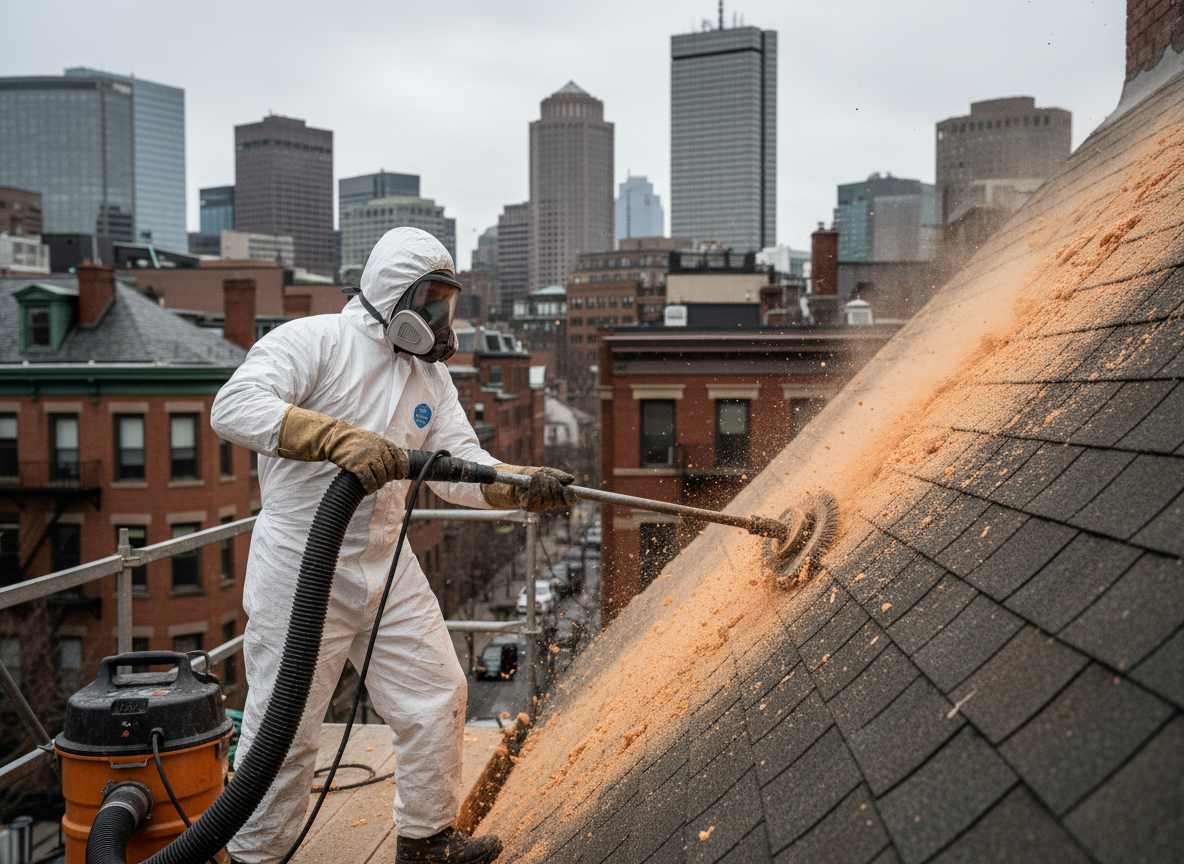
Boston’s older housing stock, particularly pre-1919 terraces and semi-detached homes along streets like South Street and near the Haven, often received spray foam insulation in the 1980s and 1990s. Over time the closed-cell foam traps moisture against timber rafters and can lead to rot, especially during the county’s frequent winter rainfall and poor loft ventilation common in these buildings.
Removal work here requires cutting the foam into manageable sections while protecting original lathe and plaster ceilings below and the clay pantile or slate roofs above. Crews must also manage the fine dust that settles into every joint, which is a particular issue in properties close to the river where humidity stays high for weeks after rain.
Local planning rules around listed buildings and conservation areas in Boston mean any visible changes to the roofline must be avoided. Technicians therefore work entirely from inside the loft, using negative-pressure extraction and HEPA filtration to keep debris off neighbouring gardens and the narrow access lanes typical of the town centre.
After the foam is cleared, rafters are inspected for damp and treated where needed before new breathable insulation or boarding is installed. This sequence prevents the rapid re-occurrence of condensation problems that homeowners in the PE21 postcode frequently report once the original foam fails.
Technician insight
In Boston the thing that catches most people out with roof spray foam removal is how the narrow Victorian lofts and high water table along the Witham keep rafters damp for months after the foam is taken out. Homeowners often assume once the foam is gone the problem is solved, but without restoring airflow the timber starts rotting again within two winters.
South Street Terrace Loft
Foam in a 1900s terrace near the river had trapped condensation against the rafters for years. Inspection showed early rot along the eaves. We sectioned and extracted the foam from inside, treated the affected timber, and opened up the original eaves vents. The owner reported the loft stayed dry through the following winter.
How it works
- 1
Loft Assessment
Inspect rafters, ventilation gaps and any existing damp staining while noting access restrictions common in Boston terraces.
- 2
Containment Setup
Seal the loft hatch and install dust extraction to protect ceilings and prevent foam particles reaching living spaces below.
- 3
Foam Sectioning
Cut and remove foam in controlled strips, working around wiring and pipework without disturbing original roof timbers.
- 4
Timber Treatment
Treat any exposed rafters showing moisture damage before clearing equipment from site.
- 5
Final Clearance
Vacuum all residue and confirm ventilation paths are open before leaving the property.
Pricing
Cost depends on roof pitch, foam depth and access difficulty in older Boston properties.