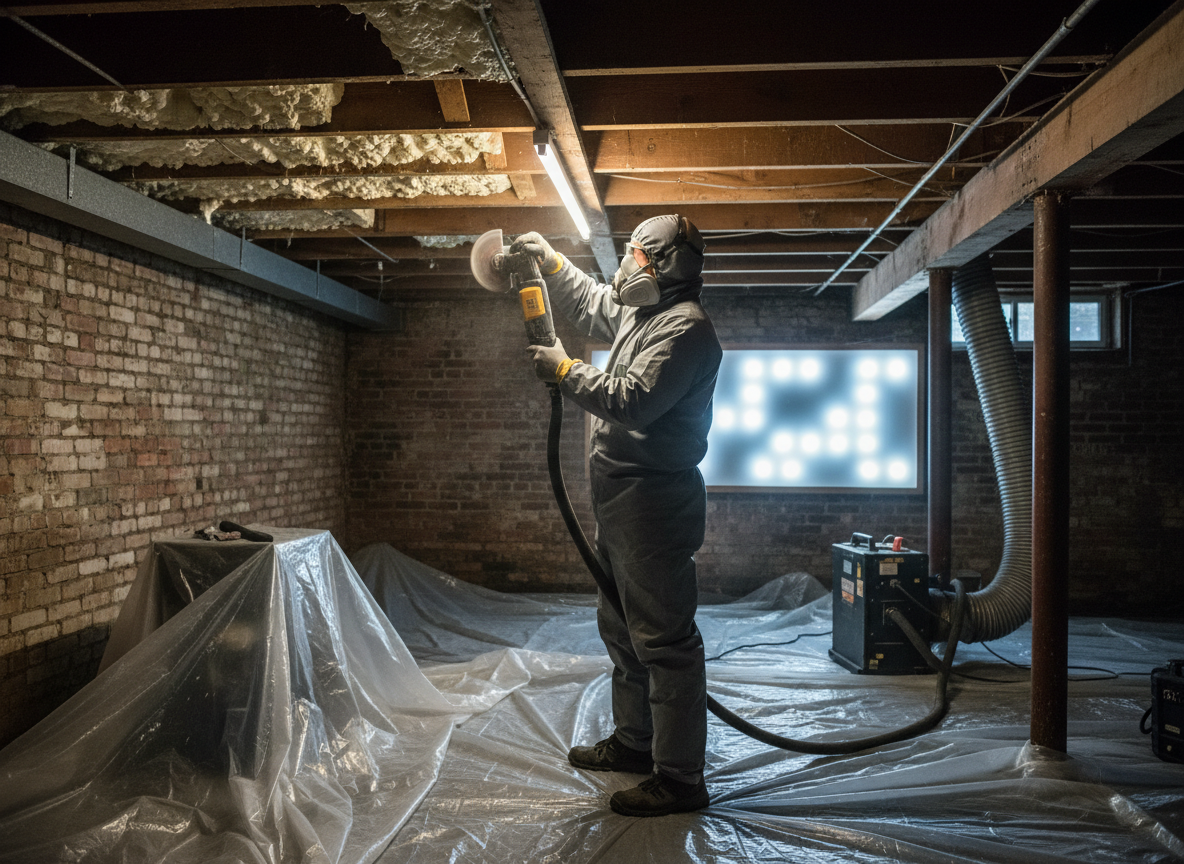
Boston's older housing stock, particularly the Victorian terraces and 1930s semis off London Road and around the market place, often received spray foam insulation in the 2000s without adequate ventilation. Once winter temperatures drop and the damp fenland air sets in, closed-cell foam traps moisture against rafters and joists, leading to rot that only becomes visible during removal. Technicians must work section by section, using negative pressure to keep dust out of living spaces below while checking every timber for softening before extraction finishes.
Removal crews based at 18 South St routinely handle callouts where foam has been applied over original lath and plaster ceilings. The process requires temporary propping of roof timbers, especially on the narrow pitches common in PE21 properties near the River Witham. Homeowners frequently discover that pulling the foam also disturbs years of accumulated dust and rodent droppings, so full containment and HEPA filtration are essential to avoid contaminating the rest of the house.
After the foam is gone, the loft must be left with proper airflow restored. In Boston this often means fitting new ridge vents or eaves baffles that were blocked during the original installation. Skipping this step simply repeats the original problem within a few winters, as the same moisture-laden air from the Wash continues to move through the roof void.
Technician insight
In Boston, the thing that catches most people out with 24/7 Spray Foam Removal is how the damp fenland air lets foam stay wet against rafters in those 1930s semis off London Road, so what looks like a quick pull often turns into timber treatment once you open it up.
Overnight Loft Clearance Near the Market Place
Homeowner in a terraced house off South Street reported a persistent musty smell. Inspection showed closed-cell foam trapping condensation against original timbers. Crew removed the foam overnight under negative pressure, cleared debris, and opened ridge vents to restore airflow.
How it works
- 1
Initial Assessment
Technician arrives within hours, inspects loft access, foam type, and any signs of timber damage or damp in the Boston property.
- 2
Site Preparation
Floor protection, negative pressure setup, and dust barriers installed to keep the rest of the home clean during extraction.
- 3
Foam Extraction
Mechanical removal of insulation in controlled sections, with ongoing checks for hidden rot or weak timbers typical in local older roofs.
- 4
Cleanup and Ventilation Check
All debris removed, loft vacuumed, and airflow restored through existing or new vents suited to Lincolnshire weather patterns.
- 5
Final Walkthrough
Homeowner shown the cleared space and any recommended follow-up work such as timber treatment or insulation alternatives.
Pricing
Site visit required for accurate quote; price depends on loft size, foam depth, and access difficulty in Boston properties.