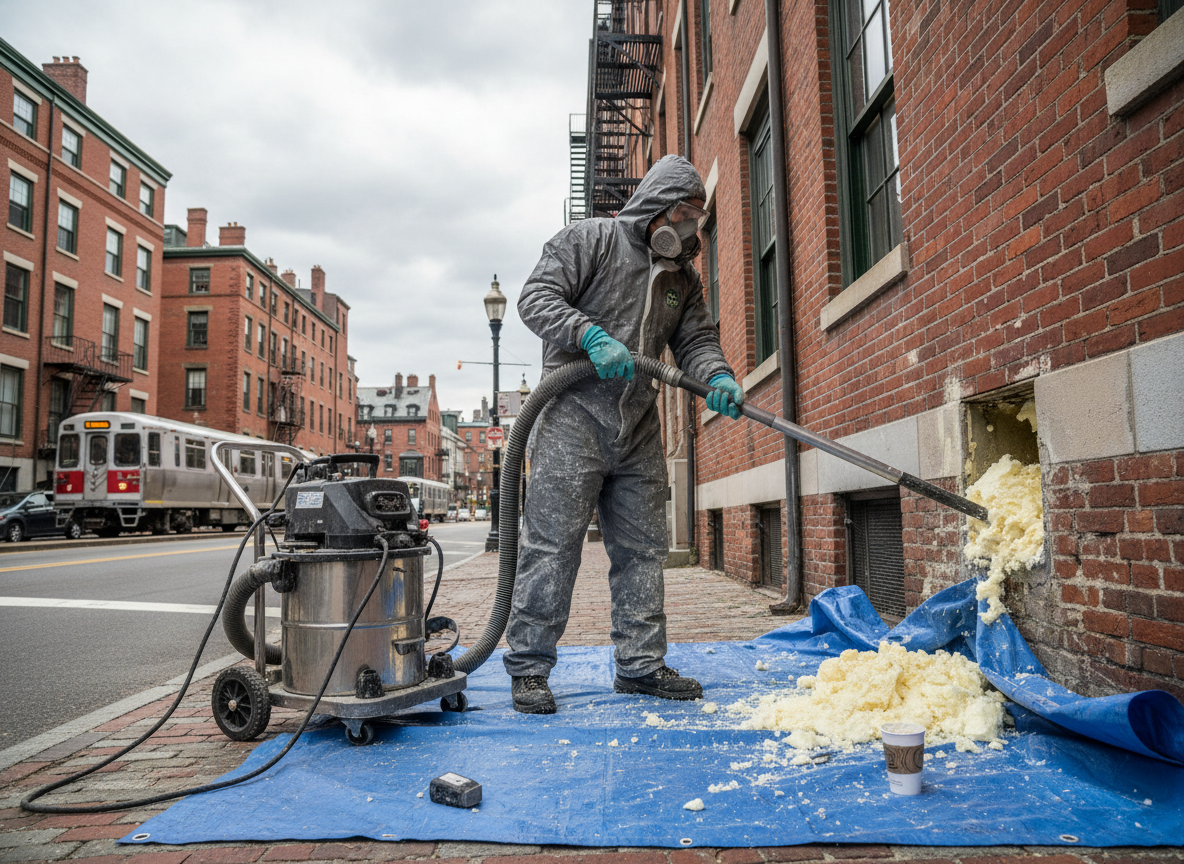
Cavity wall spray foam was installed in many Boston properties built between the 1960s and 1980s to improve insulation. Over time the foam absorbs moisture from the high rainfall and fenland water table, leading to damp patches on internal walls and reduced thermal performance. Removal requires careful drilling into the brickwork to extract the material without damaging the cavity ties or allowing debris to fall into the void below.
In Lincolnshire the combination of clay soils and frequent winter rain means water often sits against the outer leaf for days. This makes foam extraction slower than in drier counties because saturated foam clings to the brick and must be broken up in stages. Homeowners in areas such as Skirbeck and Wyberton often discover the problem only when re-plastering reveals black mould behind the original insulation.
Access is frequently restricted in Boston’s narrow terraced streets where scaffolding must be erected from the pavement. We use low-pressure extraction tools to pull the foam through small access holes, then vacuum the cavity to remove dust before any new insulation or wall ties are considered. Leaving residue can block weep holes and trap future moisture.
Older properties near the River Witham sometimes have additional complications from previous flood events that have already compromised the cavity. In these cases we inspect the base of the wall first and may need to open additional vents at ground level to ensure complete clearance before the job is finished.
Technician insight
In Boston the thing that catches most people out with cavity wall spray foam removal is how the fenland water table keeps the outer leaf damp for weeks after rain. Foam that looks dry on the surface is often still saturated at the base, so it clings and breaks into small pieces that fall behind the wall ties if you rush the extraction.
Skirbeck Terrace Job
Homeowner in Skirbeck reported persistent damp on the gable wall after heavy winter rain. We found the cavity packed with waterlogged foam that had blocked the weep holes. Extraction took two days using staged drilling and low-pressure tools; once cleared the wall dried out and no further damp appeared.
How it works
- 1
Site Survey
Inspect cavity walls from inside and out, check for damp and map foam locations in Boston properties.
- 2
Access Preparation
Drill small extraction holes at regular intervals while protecting internal finishes and garden areas.
- 3
Foam Extraction
Use specialist low-pressure equipment to break up and remove the spray foam without damaging wall ties.
- 4
Cavity Clean and Check
Vacuum remaining debris, inspect weep holes, and confirm the cavity is clear before making good.
- 5
Making Good
Fill access holes with colour-matched mortar and leave the property ready for any follow-on work.
Pricing
Cost depends on property size, number of elevations and access restrictions; we provide a clear written quote after the survey.