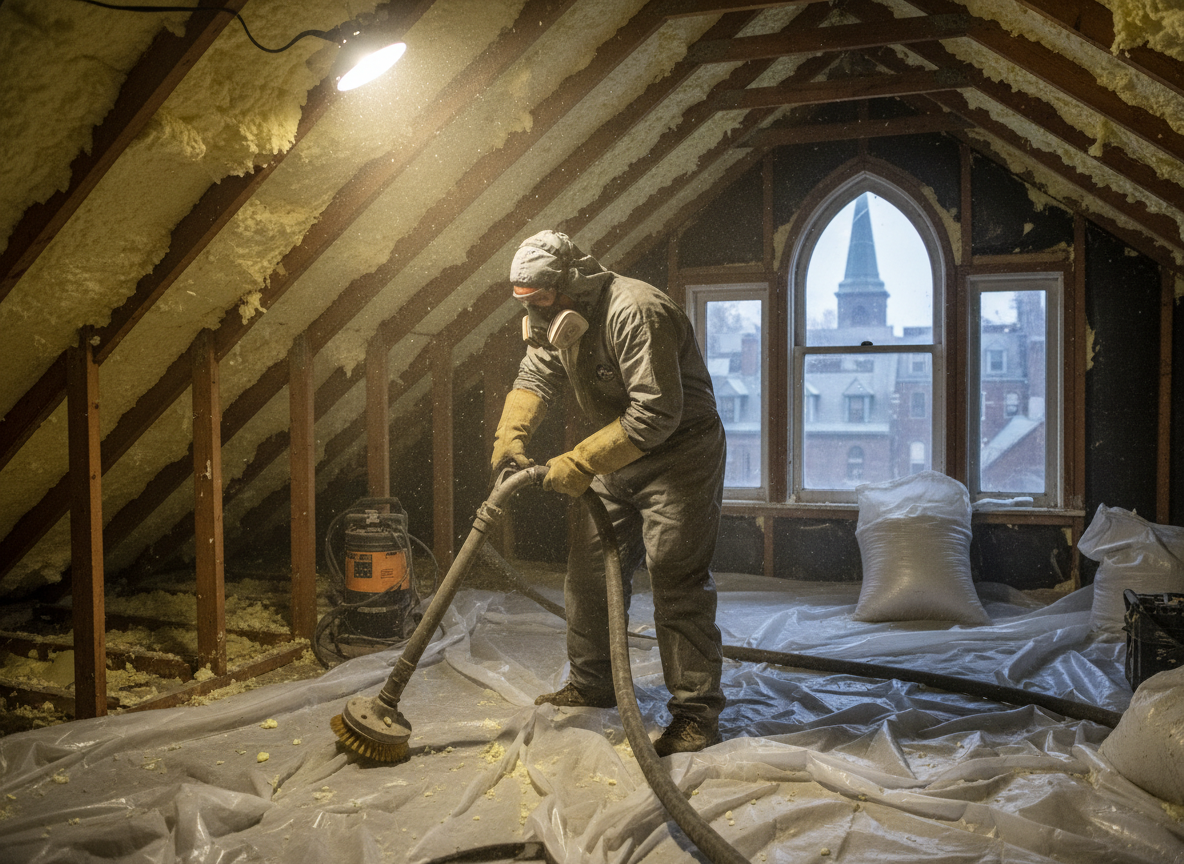
Attic spray foam removal in Boston often involves closed-cell polyurethane that was sprayed directly onto rafters and ceiling joists in properties built before 1950. These older terraced and semi-detached homes around South Street and the market square frequently have narrow loft hatches and limited headroom, making mechanical scraping and vacuum extraction slower than in newer builds. Moisture trapped beneath the foam can lead to timber decay if not addressed during removal, so we check rafter ends and wall plates before starting any work.
Winter conditions in Lincolnshire accelerate problems with spray foam because cold air meets warm roof spaces, creating condensation on the underside of the foam. Once temperatures drop below freezing, the rigid foam becomes brittle and breaks into smaller pieces that fall into insulation and electrical runs. We use containment sheeting and HEPA filtration to keep dust out of living areas below, particularly important in homes with open fireplaces still in use around the town centre.
Removing spray foam also means restoring ventilation. Many Boston attics have had eaves and ridge vents blocked by the original foam application, so we clear these paths and install new airflow measures to meet current Building Regulations Part F. Electrical cables buried under foam are inspected and rerouted where needed, and any damaged plasterboard ceilings are made good before handover.
Technician insight
In Boston, the thing that catches most people out with attic spray foam removal is how the tight roof voids in pre-war terraced houses around the river limit manoeuvring room, so we often have to work in sections and use smaller tools that take longer than the same job in newer estates further out toward Spalding.
South Street Terraced Home
Closed-cell foam had been sprayed over rafters in a 1930s terrace near the town centre. We found the foam had trapped moisture against the ridge board and blocked the original eaves vents. After careful section-by-section removal and clearing the vents, airflow was restored and the timber dried without further rot.
How it works
- 1
Site Assessment
We inspect the attic access, roof structure and any existing ventilation in Boston properties to plan safe removal routes.
- 2
Containment Setup
Dust barriers and extraction equipment are installed to protect living spaces below during foam removal.
- 3
Foam Extraction
Mechanical scraping and vacuum removal clear the foam from rafters and joists without damaging original timber.
- 4
Ventilation Restoration
Blocked eaves and ridges are cleared and new airflow measures added to prevent future condensation.
- 5
Final Clean and Check
All debris is removed, surfaces are wiped down and the attic is left ready for new insulation if required.
Pricing
Cost depends on attic size, foam thickness and access difficulty; quotes provided after inspection.